History
Established in 1972 through a joint initiative by the Government of Ghana and the United Nations, the Regional Institute for Population Studies (RIPS) was fully integrated into the University of Ghana in 1999.
Originally established to train demographers for Anglophone Africa, RIPS has evolved into a premier centre for population science education, research, and policy engagement, serving Ghana, Africa, and the wider international community.

Our Philosophy
The philosophy of the Regional Institute for Population Studies (RIPS) is rooted in the belief that rigorous academic training, interdisciplinary research, and evidence-based engagement are essential for addressing the complex and evolving demographic challenges facing Africa and the world.
This philosophy is guided by the following core principles:
- Evidence-Based Solutions
RIPS is committed to generating knowledge through research grounded in empirical evidence. This ensures that the Institute's findings, insights, and recommendations are credible, practical, and capable of informing effective policy decisions. - Interdisciplinary Approach
Recognising that population issues intersect with areas such as health, environment, economics, migration, gender, and the social sciences, RIPS adopts an interdisciplinary approach to both research and education. This enables the Institute to develop comprehensive responses to complex population and development challenges. - Capacity Building
The Institute places strong emphasis on developing future leaders, researchers, and population experts who can apply population science to real-world challenges. RIPS seeks to equip individuals with the knowledge, analytical skills, and professional competencies required to make meaningful contributions to society. - Collaboration for Impact
RIPS values partnerships with local, regional, and international institutions. The Institute recognises that collaboration and knowledge-sharing are essential for addressing global population challenges and advancing sustainable development. - Commitment to African Development
While RIPS operates within a global academic and research environment, it remains deeply committed to addressing the demographic and development challenges facing African countries. Through teaching, research, policy engagement, and knowledge dissemination, the Institute contributes to Africa's social and economic development.
By integrating these principles into its teaching, research, and policy engagement activities, RIPS seeks to make a lasting contribution to academia, public policy, sustainable development, and improved population outcomes across Africa and beyond.
Our Goal
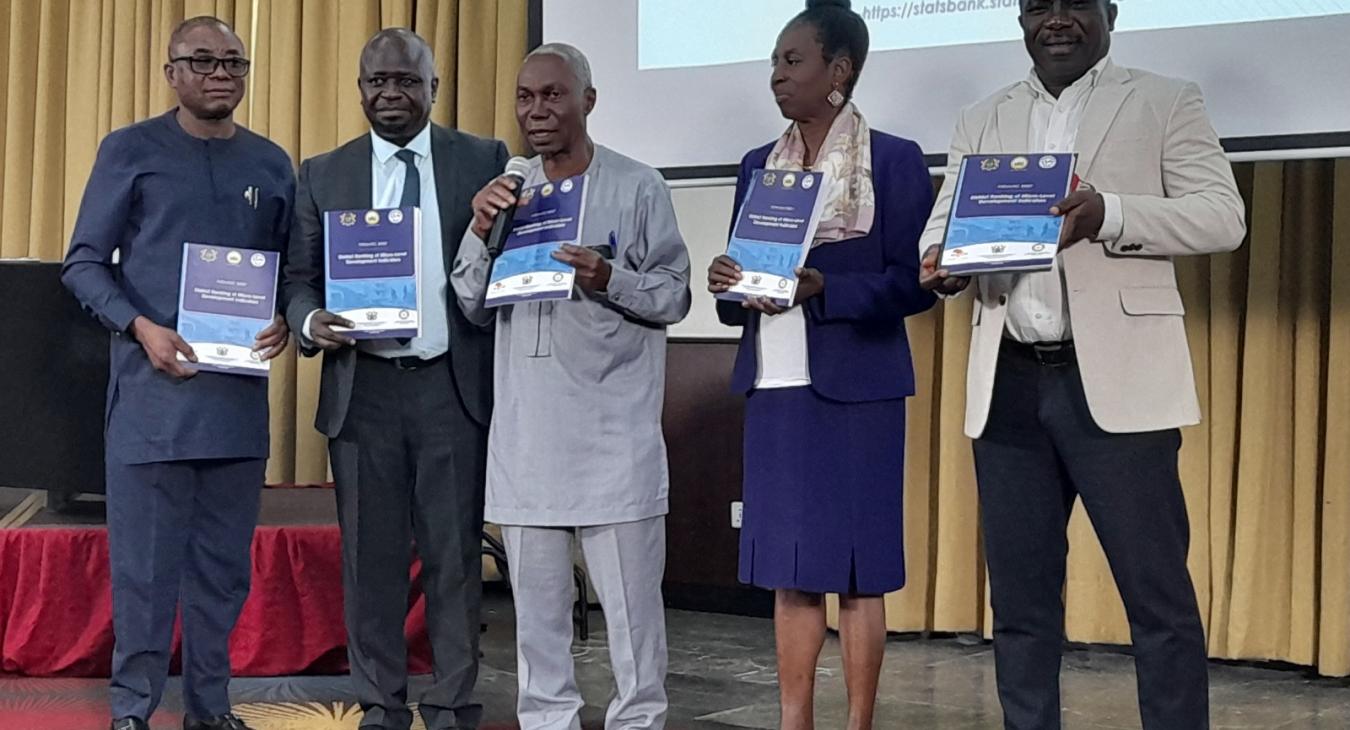
Training, Research, Policy Influence and Development
The goal of the Regional Institute for Population Studies is to train highly skilled population scientists, conduct interdisciplinary research, influence public policy, and promote sustainable development across Africa.
Through its academic programmes, research initiatives, professional training, and strategic partnerships, RIPS addresses critical population and development issues including public health, migration, fertility, mortality, gender dynamics, urbanisation, ageing, climate change, and environmental sustainability.
The Institute's work contributes to the development of effective policies, programmes, and interventions that respond to Africa's changing demographic realities and broader development priorities.
Our Mission
RIPS is committed to producing high-calibre population scientists, researchers, and professionals equipped with the knowledge and skills required to address demographic and development challenges in Africa and beyond.
Our mission encompasses:
- Providing high-quality postgraduate education and professional training in population studies and related disciplines.
- Conducting innovative and interdisciplinary research on population and development issues.
- Generating evidence to support informed policy formulation, planning, and decision-making.
- Strengthening institutional and individual capacity in population research, demographic analysis, and data utilisation.
- Building strategic partnerships with governments, academic institutions, development organisations, and international agencies.
- Contributing to sustainable development and improved population outcomes in Ghana, Africa, and beyond.