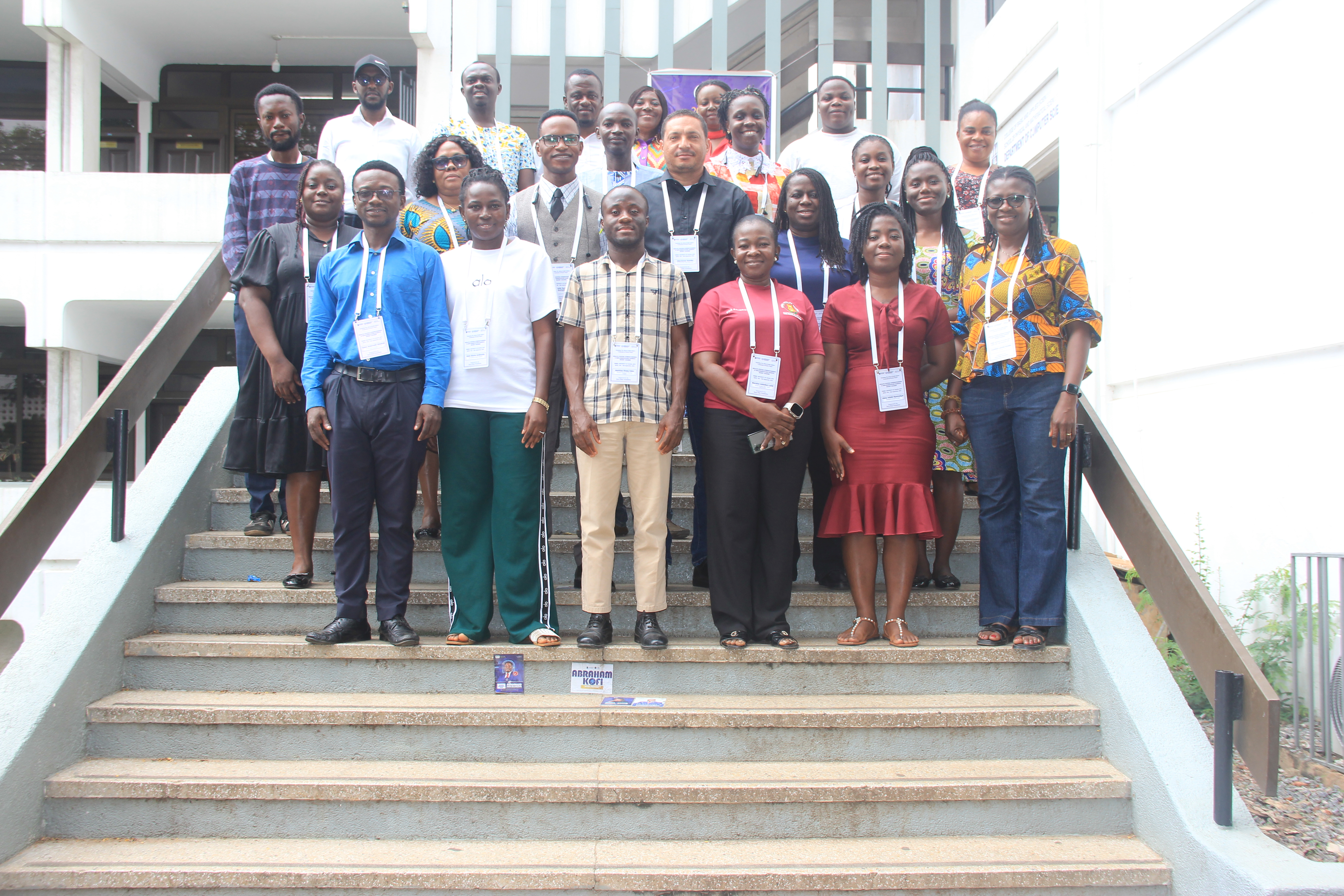
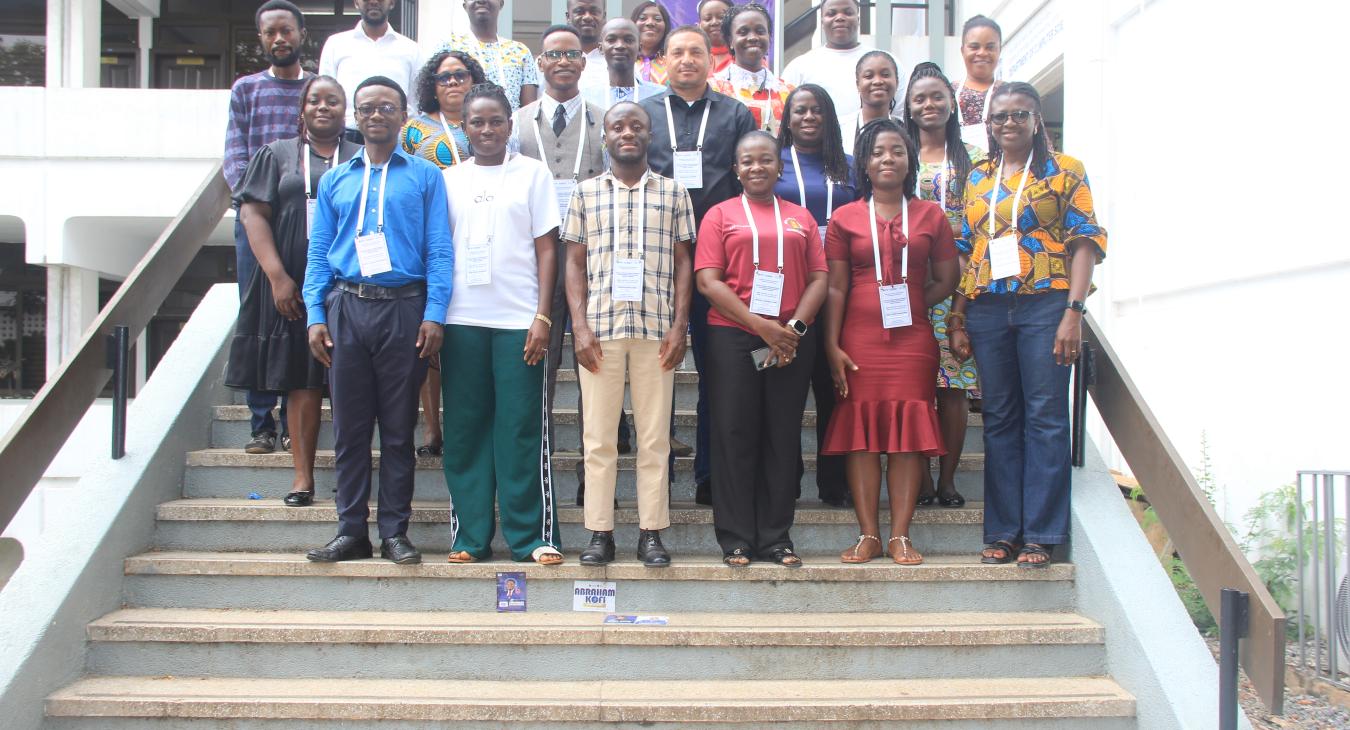
The Regional Institute for Population Studies (RIPS), under the African Health Initiative Community of Practice Project (AHICOP), in collaboration with the School of Public Health, hosted a five‑day intensive short course from 14th-18th September 2026, immersing participants in the twin worlds of health systems strengthening and implementation science. The course brought together AHICOP mentees, academics, health service professionals from across Africa, students from varied tertiary institutions, and civil society actors from different levels. Participants represented a wide range of Ghanaian institutions, including leading universities, regional and district health services, major teaching hospitals, and prominent civil society organizations and the Ministry of Health in Somalia. This mix enriched the dialogue, ensuring perspectives from research, policy, service delivery, and community engagement were all reflected. The short course deepened capacity in health systems strengthening and implementation science for researchers and practitioners from Ghana and Somalia.
The course began on Monday with a warm welcome and introductions from AHICOP and the lead Facilitator, followed by an engaging activity known as the “Martian Game,” which encouraged participants to situate themselves within the health system using rich pictures. Facilitators then introduced the definitions, boundaries, and components of health systems, as well as the roles and responsibilities of different actors such as government, private sector, and civil society. The day concluded with discussions on health system typologies, including Beveridge, Bismarck, and mixed models.
With the foundations set, the course turned to the frameworks that help practitioners make sense of complexity: the WHO's six building blocks, the World Bank's Control Knob model, and the OECD's own lens on system performance. Through case studies and group work, participants examined how these frameworks interlock, and what it truly means to judge a health system by its effectiveness, equity, and sustainability.
The conversation grew more dynamic as facilitators reframed health systems not as static structures but as living, complex adaptive systems. Participants mapped out the interests, values, and power dynamics of key actors, exploring strategies for engaging them effectively. The discussions emphasized the unpredictable nature of feedback loops and emergence, helping participants appreciate why resilience and adaptability are just as vital as sound design. Through this lens, they examined the non‑linear characteristics of complex systems and reflected on the importance of systems thinking as a foundation for health systems strengthening.
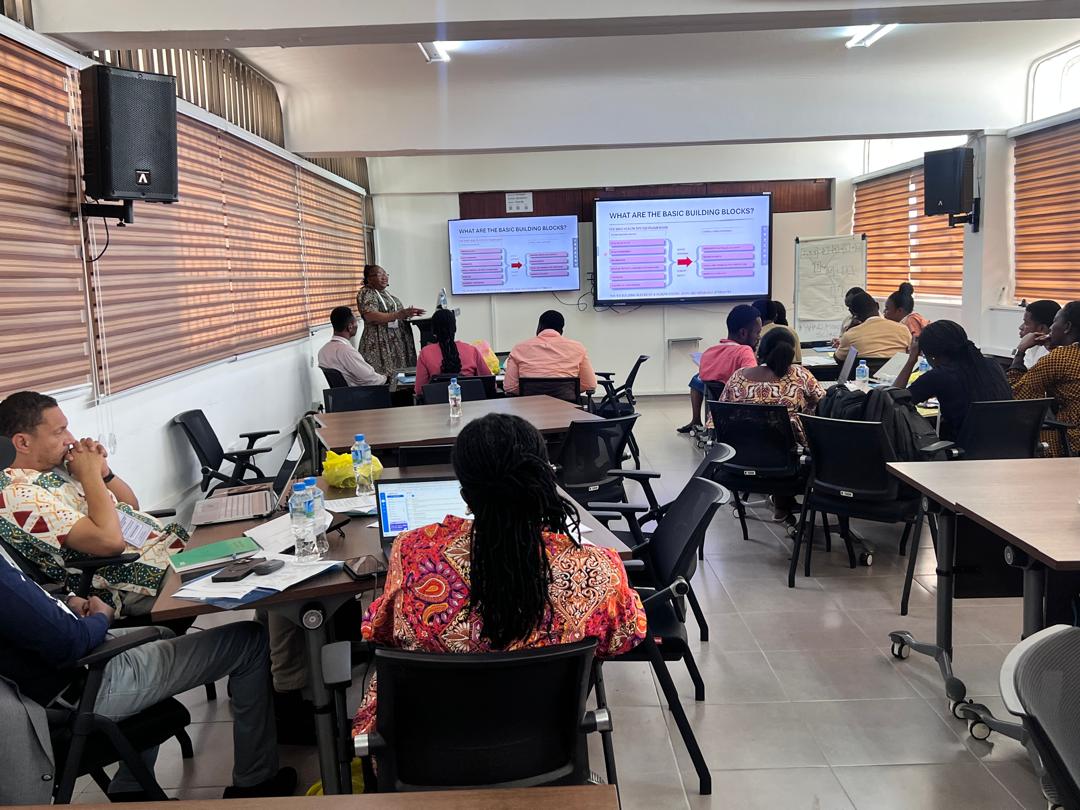
Thursday introduced participants to implementation science, with facilitators underscoring its relevance to global health and the critical role of quality improvement as a management tool for continuous program enhancement. Facilitators highlighted its relevance to global health and the importance of quality improvement as a continuous management tool. Participants were taught key frameworks such as the Consolidated Framework for Implementation Research (CFIR) and Plan‑Do‑Study‑Act (PDSA) cycles, and explored how these can be applied to design, evaluate, and adapt strategies for scaling and sustaining health programs. Practical exercises and case studies reinforced how implementation science ensures that innovations are not only effective in theory but also feasible and impactful in diverse contexts.
The final stretch brought it all together, with sessions on impact evaluation and study design that addressed how to measure a program's effects at scale while safeguarding validity, and how to translate research findings into policy briefs that command attention. Participants put their learning into practice through group project presentations and a policy brief design exercise, before the course closed with a ceremony honouring their achievement certificates awarded to every participant who successfully completed the program.
By the end of the week, participants left equipped with more than frameworks and tools; they left with a sharper, more practical lens on how health systems function and how to strengthen them. In bringing together RIPS, the AHICOP Project, and the School of Public Health around a shared commitment to evidence-based public health, the course reaffirmed the vital importance of investing in the next generation of researchers from Ghana and Somalia.
Read more articles
- Log in to post comments